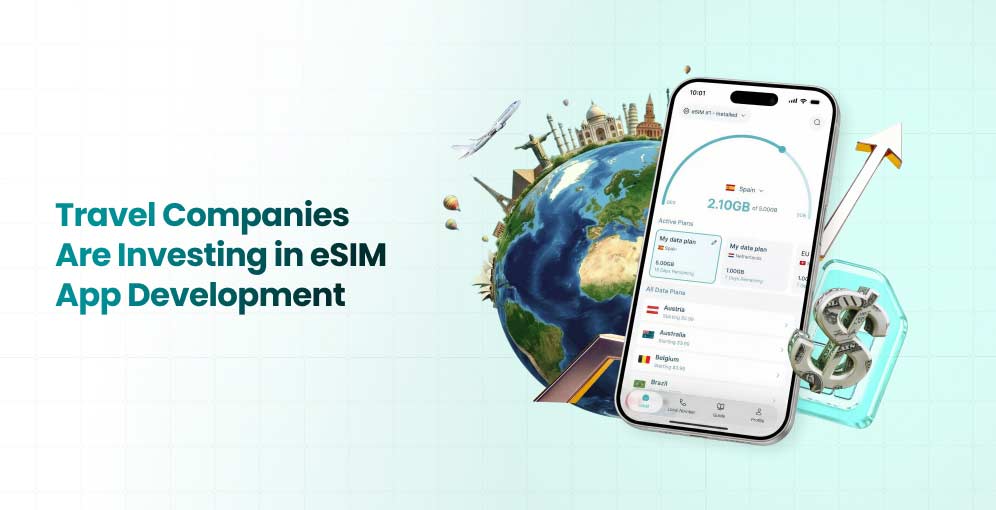
Connectivity is becoming one of the fastest-growing revenue opportunities in travel technology. As international travel rebounds and eSIM adoption accelerates worldwide, travel brands are discovering that mobile connectivity is no longer just a convenience for travelers—it is a business opportunity.
Traditional roaming services often come with high costs, inconsistent coverage, and a complicated user experience. As travelers look for more flexible alternatives, eSIM technology is quickly becoming one of the fastest-growing segments in travel technology.
This shift is creating a significant business opportunity. Around the world, travel companies are investing in eSIM App Development to offer seamless connectivity services, improve customer experiences, and unlock new revenue streams.
For travel brands, eSIMs are no longer just a technology trend. They are becoming a strategic business asset.
TL;DR
- International travel has largely recovered, creating new opportunities for digital travel services.
- eSIM adoption continues to grow as more devices support embedded SIM technology.
- Travel companies are investing in eSIM app development to improve customer experience and create new revenue streams.
- Airlines, OTAs, tour operators, and startups are increasingly exploring branded eSIM platforms.
The Market Opportunity Behind Travel eSIMs
The business case for travel eSIM platforms is becoming increasingly difficult to ignore. According to UN Tourism, international tourist arrivals reached approximately 1.4 billion in 2024, marking a near-complete recovery of global travel demand. At the same time, industry analysts including GSMA and Counterpoint Research continue to report strong growth in eSIM-enabled devices as smartphone manufacturers expand support for embedded SIM technology.
For travel businesses, these trends are converging at the right time. More people are traveling internationally, and more travelers are carrying devices capable of activating mobile data instantly without a physical SIM card. As eSIM adoption becomes more mainstream, connectivity is evolving from a telecom service into a core part of the travel experience.
This shift is creating new opportunities for airlines, online travel agencies (OTAs), tour operators, and travel startups. Instead of treating connectivity as a post-arrival challenge, many travel brands are beginning to position it as a value-added service that can improve customer experience, strengthen brand loyalty, and generate additional revenue.
The Growing Demand for Digital Connectivity in Travel
For most travelers, staying connected is one of the first priorities after arriving in a new destination.
Whether it’s booking a ride, checking directions, accessing travel documents, staying in touch with family, or handling work on the go, internet access plays a major role in the travel experience. Without a reliable connection, even simple tasks can become frustrating.
As a result, more travelers are looking for convenient ways to access mobile data abroad. International travel eSIMs have become a popular option because they allow users to activate data plans digitally without buying a physical SIM card or relying on costly roaming services.
This growing demand is also creating opportunities for travel businesses. Airlines, OTAs, tour operators, and travel startups are increasingly exploring ways to offer connectivity as part of their services, helping customers stay connected while adding value to the overall travel experience.
With digital services becoming a standard part of modern travel, investing in travel eSIM app development can help businesses meet customer expectations, improve user satisfaction, and unlock new revenue streams.
What Is eSIM Technology?
An eSIM, or embedded SIM, is a digital SIM that allows users to activate mobile data plans without inserting a physical SIM card.
Instead of purchasing a local SIM after arriving at a destination, travelers can:
- Purchase data plans online
- Activate service instantly
- Switch between carriers digitally
- Manage multiple plans through a mobile app
For international travelers, the process is faster, more convenient, and often more cost-effective than traditional roaming options.
For travel businesses, this creates an opportunity to offer branded mobile data services directly through their own digital platforms.
Why Travel Companies Are Investing in eSIM App Development
Connectivity Has Become Part of the Travel Product
Travel businesses have traditionally focused on flights, hotels, transportation, and experiences.
Today, connectivity has become another essential service travelers need.
Rather than sending customers to third-party providers, travel brands are increasingly integrating connectivity into their own ecosystems.
This allows businesses to deliver a more complete travel experience while keeping customers engaged within their platforms.
New Revenue Opportunities
One of the biggest reasons travel companies are exploring eSIM solutions is revenue diversification.
Travel businesses can generate income through:
- eSIM plan sales
- Subscription packages
- Travel bundles
- Premium connectivity offerings
- Partner commissions
- White-label telecom services
Instead of relying solely on booking commissions, travel companies can create recurring revenue streams tied directly to traveler connectivity.
Better Customer Experience
Travel brands compete heavily on customer experience.
Providing instant mobile connectivity eliminates one of the most common pain points travelers face after arrival.
Instead of searching for local SIM cards or paying expensive roaming fees, users can activate service within minutes.
A smoother experience often translates into:
- Higher customer satisfaction
- Improved retention
- Stronger brand loyalty
- Increased repeat bookings
Stronger Brand Ownership
When travelers purchase connectivity through a third-party platform, the travel company loses a valuable customer touchpoint.
By offering their own eSIM application, businesses maintain direct relationships with users throughout the journey.
This ownership creates opportunities for:
- Personalized recommendations
- Travel upselling
- Loyalty programs
- Targeted promotions
- Customer engagement campaigns
How Travel Companies Make Money from eSIM Services
The commercial appeal of travel eSIM platforms extends far beyond connectivity itself. For many travel brands, eSIM services create new monetization opportunities that complement existing travel products.
Direct Data Plan Sales
Travelers purchase destination-specific or regional data packages directly through the company’s platform. Each purchase generates revenue while keeping customers within the brand ecosystem.
Travel Package Bundling
Travel companies can bundle connectivity with flights, accommodations, guided tours, or transportation packages. This creates additional value for travelers while increasing average order value.
Carrier Revenue Sharing
Many eSIM business models involve partnerships with telecom operators. Travel companies earn a percentage of revenue generated from data plan purchases without operating network infrastructure themselves.
Subscription-Based Travel Connectivity
Frequent travelers often prefer ongoing connectivity solutions. Monthly or annual subscription plans can create predictable recurring revenue streams.
Premium Membership Benefits
Travel brands can include exclusive eSIM packages within loyalty programs or premium memberships, increasing customer retention and perceived value.
How eSIM Technology Is Transforming the Travel Industry
| Business Type | eSIM Opportunity |
| Online Travel Agencies (OTAs) | Bundle connectivity with travel bookings |
| Airlines | Offer branded travel data packages |
| Tour Operators | Provide connectivity across multi-destination trips |
| Travel Startups | Build recurring revenue and differentiated experiences |
Real-World Validation of the Travel eSIM Market
The success of companies such as Airalo, Holafly, Nomad, and GigSky demonstrates growing demand for digital connectivity services among international travelers. Their growth is encouraging airlines, OTAs, and travel brands to explore their own branded eSIM offerings.
Key Features Every Travel eSIM App Should Include
Successful travel eSIM platforms focus on simplicity, reliability, and user experience. Essential features include:
Instant eSIM Activation: Users should be able to purchase and activate plans within minutes.
Global Coverage: Access to multiple regions and countries is critical for international travelers.
Flexible Data Packages: Travelers need options based on destination, trip duration, and data requirements.
Real-Time Usage Monitoring: Users should easily track data consumption and remaining balances.
Secure Payment Integration: Payment systems must support international transactions securely.
Multi-Language Support: Travel platforms often serve users from different regions and languages.
Customer Support Integration: Quick support channels help resolve activation or connectivity issues efficiently.
Why Building Your Own eSIM Platform Creates Long-Term Value
Many travel brands initially partner with eSIM solution providers like Kolpolok Limited.
While this can help businesses enter the market quickly, owning the platform provides greater control.
Custom eSIM app development allows businesses to:
- Control user experience
- Own customer relationships
- Customize pricing models
- Build proprietary features
- Integrate travel services
- Increase profit margins
As eSIM adoption grows, platform ownership becomes increasingly valuable.
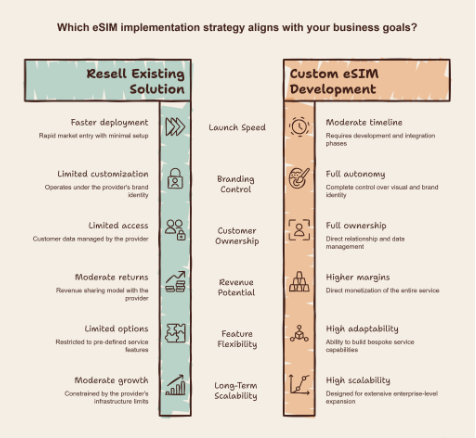
Should Travel Companies Build or Resell eSIM Services?
Many travel businesses begin by reselling existing eSIM products. This approach offers a faster route to market and lower initial investment requirements. However, it often limits branding opportunities, customer ownership, and profit margins.
Custom eSIM platform development requires greater upfront investment but provides significantly more control. Businesses can create branded user experiences, customize pricing strategies, integrate loyalty programs, and develop unique travel-focused features.
The right approach depends on business goals. Companies testing market demand may prefer reseller models initially, while businesses focused on long-term growth often choose custom platform development to build stronger competitive advantages.
Common Challenges in Travel eSIM Platform Development
Launching a travel eSIM platform involves more than building a mobile application. Businesses must manage carrier integrations, payment processing, user onboarding, compliance requirements, and customer support across multiple regions.
Ensuring reliable coverage and maintaining a smooth activation experience can also become challenging as platforms scale internationally. This is one reason many businesses choose to work with an experienced eSIM app development company that understands both travel technology and telecom infrastructure.
Choosing the Right eSIM App Development Company
Developing a successful eSIM platform requires expertise across multiple industries. So, choosing the right eSIM app development provider is often one of the most important decisions when launching a travel connectivity platform.
When evaluating an eSIM app development company, consider the following factors.
Telecom Integration Expertise
The development team should understand carrier integrations, provisioning systems, and connectivity infrastructure.
Security and Compliance
User data protection and secure transactions are essential for building trust.
Scalability
The platform should support future growth without requiring major architectural changes.
Travel Industry Understanding
A development partner should understand traveler behavior, booking journeys, and travel business models.
Ongoing Support
Post-launch maintenance, updates, and optimization are critical for long-term success.
Looking to launch your own travel eSIM platform?
The Future of Travel eSIM Platforms
Connectivity is expected to become increasingly integrated into the broader travel ecosystem. Rather than purchasing data separately, travelers may receive connectivity automatically as part of flight bookings, hotel reservations, or travel memberships.
Industry forecasts suggest that eSIM adoption will continue growing across consumer and enterprise markets, creating new opportunities for travel brands to integrate connectivity directly into their services. Future travel eSIM platforms are likely to include:
- AI-powered travel planning and recommendations
- Dynamic destination-based data plans
- Integrated travel wallets
- Embedded travel insurance services
- Smart roaming optimization
- Loyalty-based connectivity rewards
As travel experiences become more connected, the distinction between travel services and connectivity services will continue to blur.
Frequently Asked Questions
What is eSIM app development?
Why are travel companies investing in eSIM app development?
What are the benefits of eSIM apps for travel businesses?
How do travel companies make money from eSIM services?
What features should a travel eSIM app include?
How much does eSIM app development cost?
How long does it take to develop a travel eSIM app?
Can airlines and travel agencies launch branded eSIM apps?
What should businesses look for in an eSIM app development company?
Is eSIM technology the future of international travel connectivity?
Final Thoughts
The travel industry is entering a new phase where connectivity is becoming an essential part of the customer experience.
Travelers increasingly expect instant internet access wherever they go, while travel businesses are recognizing the opportunity to turn connectivity into a value-added service. Through travel eSIM app development, companies can create new revenue streams, improve customer engagement, and strengthen brand loyalty.
As demand for international travel eSIM solutions continues to grow, businesses that invest in digital connectivity platforms early will be better positioned to differentiate their services and meet evolving traveler expectations.
For travel brands exploring their next growth opportunity, now may be the right time to evaluate how a branded eSIM platform can fit into their digital strategy.
Looking to launch a branded connectivity platform? Discuss your eSIM app development requirements with our team.