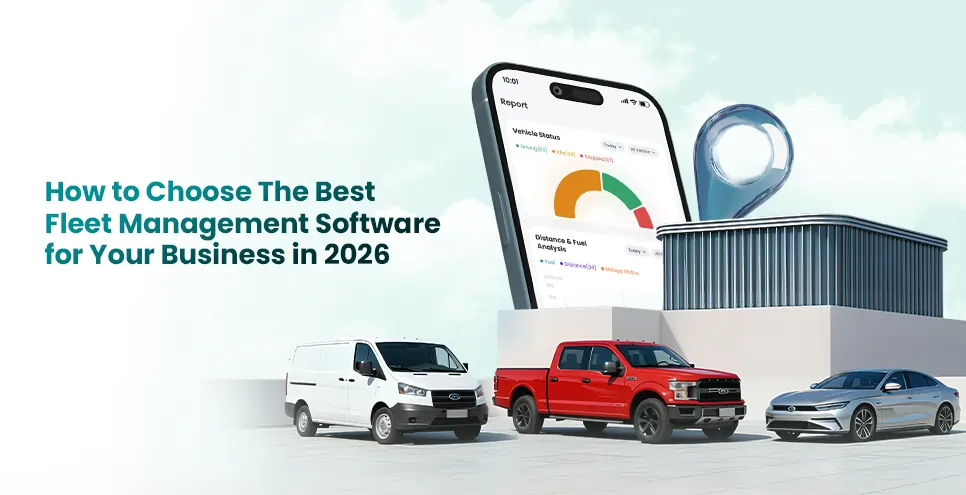
Nowadays, fleet management involves balancing costs, compliance, and customer satisfaction. Every delay, every extra kilometer, and every unplanned repair eats into your profit. That’s why more businesses are adopting modern fleet management software. It streamlines operations, reduces fuel and maintenance waste, and keeps every vehicle on schedule.
GPS tracking alone will not be enough to choose the best fleet management software in 2026. It’s about selecting a system that fits your business goals, automates routine work, and delivers real-time visibility that turns fleet data into actionable results.
This guide walks you through the features, trends, and steps to make the right choice for your business.
Table of Contents
Why Your Business Needs the Best Fleet Management Software in 2026
The fleet industry is changing faster than ever. New technology is reshaping how vehicles are tracked, maintained, and managed.
AI-powered analytics, connected IoT sensors, and GPS-based fleet management now give businesses the data to make smarter, faster decisions.
Companies using these smart fleet management solutions are seeing real results, like controlled fuel costs, fewer breakdowns, and better asset utilization.
The global fleet management market is projected to reach over $67 billion by 2030, fueled by automation, AI, and sustainability goals
Those still using spreadsheets or manual logs are already falling behind. They lose time, miss insights, and struggle to meet compliance standards.
For small and mid-sized fleets, adopting modern software isn’t optional anymore. It’s the only way to stay efficient, competitive, and profitable in 2026.
Key Features to Look For in Fleet Management Software
Not every platform delivers the same results. The best fleet management software gives you visibility, control, and confidence in daily operations.
When evaluating different vendors, focus on the features that truly impact performance, safety, and cost. These are what separate basic tools from full-fledged business systems.
1. Real-Time GPS Tracking
A strong GPS-based fleet management system shows where your vehicles are at all times. It improves route planning, response speed, and customer communication.
Modern systems also record trip history, monitor routes, and send alerts when vehicles enter or leave a zone. This level of visibility keeps operations predictable and efficient.
2. Route Optimization and Dispatch
AI-driven route planning finds the fastest, most fuel-efficient paths. The system automatically assigns tasks to the nearest driver and adjusts routes when traffic changes.
It saves time, cuts fuel costs, and ensures every delivery stays on schedule.
3. Maintenance Scheduling and Predictive Alerts
Downtime drains productivity. Good software tracks mileage, service history, and sensor data to predict maintenance needs before breakdowns happen.
These alerts help you prevent repairs instead of reacting to them. The result: fewer delays and longer vehicle life.
4. Driver Behavior and Safety Monitoring
Safe drivers protect your business and vehicles. The system monitors speed, harsh braking, and idling to evaluate driving habits.
With performance scores, managers can reward safe driving and coach those who need improvement. It builds a culture of accountability across the fleet.
5. Fleet Automation Tools
Automation is one of the strongest trends in 2026. Fleet automation tools take care of reports, logs, and fuel tracking automatically.
They eliminate manual errors and save hours of admin time each week. Your team focuses on decisions, not data entry.
6. Smart Analytics and Performance Dashboards
The best systems simplify complex data into clear visuals. You can see which routes cost more, which drivers perform better, and where vehicles sit idle.
These smart fleet management solutions help managers act quickly and make informed, data-backed choices.
7. Integration and Scalability
Your software should connect smoothly with CRMs, accounting tools, or telematics devices.
A connected ecosystem keeps your data consistent and makes growth easier as your fleet expands.
8. Data Security and Compliance
Fleet data is valuable and sensitive. Choose software that uses encryption, user permissions, and regular backups to keep it safe.
If your operations involve logistics or regulated contracts, make sure the system meets local compliance standards. Security is now a business essential, not an option.
Pro Insight: Many tools claim to offer automation, but only a few combine it with predictive analytics. This pairing gives managers more than reports, it gives early warnings that prevent costly problems.
| Quick Feature Summary | |
| Feature | Why It Matters |
| Real-Time GPS Tracking | Improves visibility and route control |
| Route Optimization | Reduces fuel costs and delivery time |
| Predictive Maintenance | Prevents downtime and repair expenses |
| Driver Monitoring | Enhances safety and accountability |
| Automation Tools | Saves admin time and reduces errors |
| Smart Analytics | Turns fleet data into action |
| Integration | Keeps data consistent across systems |
| Data Security | Protects business and customer information |
How These Features Work Together
When these capabilities connect, your fleet optimization improves across every level. Real-time fleet visibility from GPS and telematics data flows into analytics dashboards that reveal actionable patterns.
AI-powered automation in fleet management systems then turns those insights into instant reports, helping managers make data-driven decisions without delay. Predictive maintenance insights catch small issues before they cause downtime.
Together, these tools form an end-to-end fleet management system — a connected fleet ecosystem that drives operational efficiency and consistent performance every day.
How to Choose the Right Fleet Management Software for Your Business
Buying software is easy. Choosing the right one takes strategy and clear thinking. Follow these steps to make sure your investment delivers real results and long-term ROI.
Step 1: Define Your Business Needs
Start by mapping your daily challenges and goals. Do you need to control fuel costs, improve route efficiency, or boost driver accountability?
Write them down clearly. When your needs are specific, it becomes easier to match them with the right fleet management system. This clarity also helps you avoid paying for features you’ll never use.
Step 2: Set a Realistic Budget
Most fleet management software options range from $15 to $120 per vehicle per month, depending on features and fleet size.
Factor in the total cost of ownership including hardware, telematics devices, data plans, and training. Look for value, not just a low price. A system that saves time, fuel, and maintenance costs pays for itself quickly.
Step 3: Evaluate Core Features
Go back to the key fleet management software features listed earlier. Prioritize the ones that directly impact your operations. A delivery company may focus on route optimization. A construction firm might care more about asset tracking and equipment visibility.
Compare multiple options side by side with a simple fleet software comparison checklist. The best solution balances essential tools with flexibility, so you can adapt as your business grows.
Step 4: Check Vendor Support and User Experience
Good software isn’t enough — the vendor behind it matters. Look for responsive support, hands-on onboarding, and regular updates.
Reliable vendors simplify implementation and adoption with training sessions, FAQs, and dedicated account managers. An intuitive interface and smooth navigation reduce learning time and improve team engagement.
Before deciding, review customer testimonials or case studies to confirm how the vendor performs in real-world conditions.
Step 5: Test with a Free Trial or Demo
Always test before committing. Ask for a trial or demo and simulate real operations — dispatching drivers, tracking vehicles, and running maintenance reports.
Test automation in dispatch and reporting to see how the system handles repetitive tasks and live updates.
Check system speed, accuracy, and usability.
A live demo helps you assess both experience and fleet software ROI evaluation before signing up.
Step 6: Plan for Growth and Integration
Your fleet will grow over time. Choose a platform that scales easily and supports future integrations like EV tracking, IoT sensors, or compliance modules. Make sure it allows telematics integration with GPS devices and fuel monitoring systems.
The system should connect with your CRM, HR, and accounting tools to create one end-to-end fleet management system — a truly connected ecosystem that grows with your business.
Step 7: Assess Data Security and Compliance
Modern fleets manage sensitive information — driver data, route history, and customer records. Choose a platform with encryption, access control, and automatic backups.
If you work in logistics, transport, or government contracts, confirm that the software meets your regional compliance standards. Strong data protection keeps your operation secure and your reputation intact.
Step 8: Review Reporting and Analytics
Strong analytics turn raw data into clear decisions. Look for dashboards that visualize performance, costs, and driver behavior.
A good smart fleet management solution helps you forecast maintenance, optimize fuel use, and track cost per trip — not just display data.
Step 9: Evaluate the Vendor’s Long-Term Vision
Technology evolves fast. Partner with a vendor who invests in AI, automation, and sustainability. A provider with a forward-thinking roadmap ensures your system keeps up with the latest industry trends and compliance needs.
Step 10: Make a Confident Decision
After shortlisting your top choices, compare features, pricing, and support. Choose the platform that fits your goals, scales with your fleet, and integrates smoothly with your existing tools.
The right smart fleet management solution isn’t just another software purchase — it’s a long-term business partner for efficiency, safety, and growth.
Top Trends in Fleet Management Software for 2026
The fleet industry is moving into a new era of intelligence and automation. What once started with simple GPS tracking has evolved into a data-driven, AI-powered ecosystem.
From predictive analytics to connected IoT sensors, the latest smart fleet management solutions are transforming how businesses operate in 2026.
Here are the top trends reshaping the future of fleet operations this year:
1. Predictive Analytics for Maintenance
AI can now analyze sensor and telematics data to predict when a vehicle might need service — before a breakdown happens. These predictive insights help fleets schedule maintenance proactively, reducing downtime and repair costs.
This trend is quickly becoming a must-have feature in every modern fleet management system.
2. IoT and Connected Fleet Ecosystems
Every asset in a fleet, from trucks to tools can now be part of a connected ecosystem.
IoT sensors track tire pressure, fuel levels, and engine health in real time. Managers gain a live view of performance, helping them make data-driven decisions that boost safety and efficiency.
3. Rise of AI-Powered Automation
AI-powered automation is simplifying daily operations across fleets. Tasks like route scheduling, dispatching, reporting, and driver alerts are now automated through fleet automation tools.
This doesn’t just save time — it ensures accuracy and consistency across all departments.
4. Cloud-Based and Mobile-First Platforms
The shift to SaaS-based fleet management software means managers can monitor operations anytime, anywhere. Moreover, mobile apps now provide full dashboards on phones and tablets, enabling faster communication and quicker responses on the go.
Cloud storage also simplifies updates, backups, and integration with other systems like CRM or accounting software.
5. Electric Vehicle (EV) Fleet Tracking
As more companies adopt electric vehicles, EV fleet management features are becoming essential. However software can now track battery status, charging station availability, and energy usage per trip.
This helps businesses optimize charging cycles, reduce costs, and meet sustainability goals.
6. Sustainability and Green Reporting
Environmental responsibility is no longer optional. The best fleet management software now includes CO₂ tracking, eco-driving behavior analytics, and emission reports.
These insights help companies monitor their carbon footprint and build greener fleets without compromising productivity.
7. Telematics Integration and Sub-Minute GPS Updates
Advancements in GPS-based telematics now offer updates as fast as every few seconds. This ultra-real-time tracking improves safety and accuracy, especially for logistics and delivery businesses.
Platforms that combine telematics data with analytics provide an unmatched view of fleet performance.
8. Accessibility for Small and Mid-Sized Fleets
Fleet software is no longer limited to large enterprises. Cloud-based pricing and modular plans make smart fleet management solutions accessible to smaller operators too.
Small businesses can now enjoy the same visibility, automation, and predictive tools once reserved for corporate fleets.
These innovations of technology redefine how fleets create value. AI, IoT, and automation turn raw data into insights that power fleet optimization, efficiency, and compliance.
The companies adopting these fleet automation tools early are already seeing safer operations, fewer costs, and faster decisions.
Common Mistakes to Avoid When Selecting Software
Even experienced fleet managers can make costly mistakes when choosing a new system. Avoid these pitfalls to save time, money, and endless frustration.
- Choosing Software Based Only on Price
- Ignoring integration needs with existing tools
- Skipping driver training during implementation
- Overlooking hardware compatibility (especially for GPS devices)
- Not reviewing vendor reputation or data privacy policies
- Not considering scalability
- Getting locked into inflexible contracts
- Under-estimating data & change-management
Avoiding these mistakes helps your business choose a system that’s reliable, scalable, and secure.
A thoughtful selection process today saves months of rework and wasted costs later.
Implementation Tips for a Smooth Transition
Rolling out the right fleet management software is only half the journey. The real impact comes from a smooth rollout that gets your team onboard fast.
- Start Small: Begin with a pilot group of vehicles or drivers. Test features and gather early feedback.
- Prepare Your Data: Clean up your existing records before migration to avoid duplicate or missing entries.
- Train the Team: Provide hands-on training so everyone understands dashboards, alerts, and reports.
- Assign a Project Lead: Designate one internal owner to manage timelines and vendor communication.
- Integrate Early: Connect the system with GPS devices, accounting tools, and dispatch software from day one.
- Monitor Progress: Track KPIs like downtime, fuel use, and on-time deliveries to measure success.
A well-planned implementation ensures the fleet management system delivers results from the first week — not months later.
Final Checklist Before You Decide
✔️ Define your fleet goals and priorities
✔️ Evaluate must-have features
✔️ Compare vendors and pricing
✔️ Check data security and support
✔️ Ensure integration with existing tools
✔️ Confirm scalability and future readiness
✔️ Run a free trial or demo
✔️ Plan team training and onboarding
✔️ Review ROI expectations
✔️ Prepare for smooth implementation
FAQs about Best Fleet Management Software:
What is the best fleet management software in 2026?
The best fleet management software in 2026 offers real-time GPS tracking, automation tools, predictive analytics, and easy integration. The ideal platform depends on your fleet size and goals.
How much does fleet management software cost?
Fleet management cost can mean two different things:
A) Cost to build your own fleet management software (development)
If you’re developing a custom fleet management system, pricing varies based on the scope — such as GPS tracking, telematics integration, dashboards, mobile apps, or AI analytics.
Custom development typically starts from a one-time software development investment, not per-vehicle fees.
B) Cost to use a fleet management system (subscription)
If you’re using an existing fleet management platform, the typical cost ranges from $15 to $120 per vehicle per month.
This varies based on hardware, telematics sensors, AI features, reporting tools, and customer support. Best fleet management software providers offer modular pricing so small and mid-sized fleets pay only for what they need.
What features should I look for in fleet management software?
Focus on GPS tracking, route optimization, predictive maintenance, driver behavior monitoring, automation tools, analytics, and scalability.
How long does it take to implement a fleet management system?
Implementation usually takes a few weeks, depending on fleet size and data migration. Starting with a pilot rollout helps speed up adoption and minimize downtime.
Can small businesses use fleet management software?
Absolutely. Modern smart fleet management solutions are cloud-based, affordable, and scalable — making them ideal for small and growing fleets.
How does fleet management software improve ROI?
This system reduces fuel waste, prevents downtime, automates reports, and improves driver safety, which results in lower operating costs.
Conclusion
Fleet management in 2026 is not about only tracking vehicles but also it’s about optimizing the entire operation. The right software connects people, assets, and data in one place.
When chosen carefully, a smart fleet management solution transforms how you plan routes, manage maintenance, and control costs.
Businesses that embrace automation and real-time visibility today will lead the road tomorrow. And those that delay will keep losing time, data, and profit in the process.
If you’re ready to see how technology can simplify fleet operations, explore Kolpolok’s Fleet Management Software. With GPS-based tracking, automation, and analytics, your business can run faster, safer, and smarter.